
PART 1
Decoding Patchwork Puzzle Patterns in Jacquard Denim
Why This Pattern Is Worth Attention — Modularity Replacing Motifs
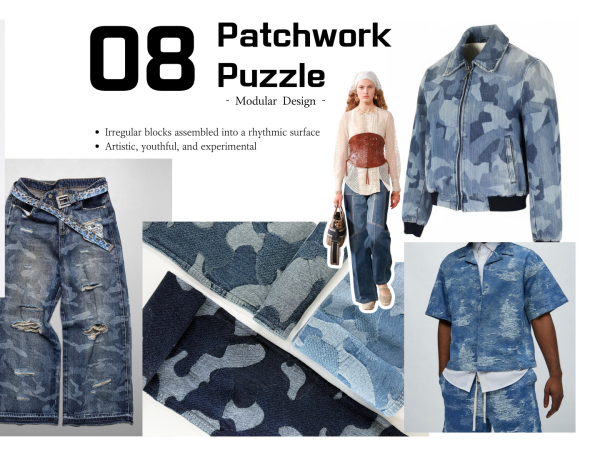
At first glance, the Patchwork Puzzle jacquard does not behave like a traditional pattern.
There is no floral identity.
No geometric symmetry.
No recognizable symbol.
Instead, the surface is built from irregular modular blocks — assembled like fragments of a visual system.
This is important.
Because in modern denim, patterns are increasingly moving away from motifs,
and toward surface behavior.
The Patchwork Puzzle design follows this shift.
Rather than asking:
“What does the pattern represent?”
It asks:
“How does the surface behave?”
This modular logic creates a rhythmic but non-repetitive texture.
It avoids both extremes:
· not too decorative
· not too plain
That balance is exactly what many buyers are currently looking for —
a fabric that has identity, but remains commercially wearable.
Origin of Patchwork Aesthetics — From Craft Tradition to Modern Structure
Patchwork as a visual language originates from textile craft traditions.
Historically, patchwork appeared in:
- American quilting culture
· Japanese boro textiles
· European repair garments
· Workwear reinforcement panels
In these contexts, patchwork was functional — not decorative.
It came from fabric scarcity, repair, and reuse.
Over time, this logic evolved into an aesthetic.
Irregular panels became visual rhythm.
Different blocks became structural contrast.
Assembly became design language.
The modern reinterpretation is different.
Traditional patchwork:
· visible stitching
· color contrast
· obvious panel segmentation
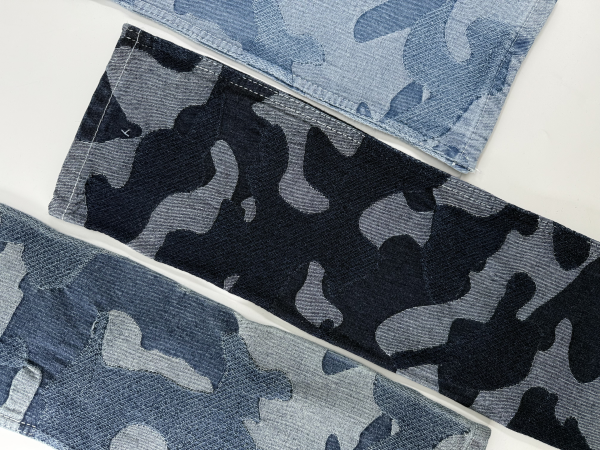
Modern jacquard patchwork:
· woven instead of stitched
· tonal instead of contrast
· structural instead of assembled
This shift transforms patchwork from garment construction
into fabric construction.
And that is where jacquard becomes important.
Cultural Meaning — Controlled Chaos and Youthful Experimentation
Patchwork aesthetics carry a specific cultural message.
They represent:
- creativity
· individuality
· experimentation
· anti-uniformity
Unlike traditional repeating patterns,
patchwork implies freedom.
No block is identical.
No repeat is obvious.
No direction is fixed.
This aligns strongly with contemporary youth-oriented design.
Especially in categories like:
streetwear
casual denim
gender-neutral fashion
experimental collections
The message is subtle:
not loud expression,
but visual independence.
This makes patchwork jacquard particularly suitable for modern denim,
where individuality is expected,
but excessive decoration is avoided.
Visual Characteristics — Rhythm Without Repetition
The Patchwork Puzzle structure creates a unique visual behavior.
Surface structure:
· irregular modular blocks
· non-linear repeat
· fragmented but balanced
Pattern perception:
· reads as texture first
· pattern discovered gradually
· no focal point dominance
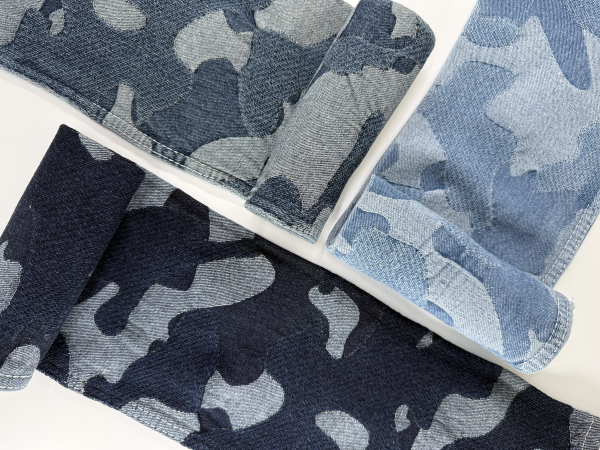
Color behavior:
· tonal layering
· subtle contrast
· depth through density
This leads to an important advantage:
From distance — clean and structured
From close — detailed and dynamic
This dual reading is increasingly valuable in denim,
especially for commercial products that must balance
identity and wearability.
Why Patchwork Works Naturally with Denim
Not every pattern adapts well to denim.
Denim changes during washing:
· fading
· distortion
· abrasion
Patterns that require precision often lose clarity.
Patchwork behaves differently.
Because:
- irregularity is built-in
· distortion becomes part of design
· fading enhances block variation
Instead of resisting washing,
patchwork integrates washing.
This makes it structurally compatible with denim.
PART 1 Closing Insight
Patchwork Puzzle jacquard is not about decoration.
It is about structure.
It does not rely on motif recognition,
but on surface rhythm.
It does not fight denim behavior,
but works with it.
This is what makes modular jacquard patterns increasingly relevant
in modern denim development.
PART 2
Jacquard Denim Industry Analysis
Supply Chain Structure & Production Complexity
Why Jacquard Denim Has a More Complex Supply Chain
Compared to basic denim, jacquard denim requires coordination across more production stages.
Basic denim structure is relatively straightforward:
yarn → dyeing → weaving → finishing
Jacquard denim introduces additional variables:
pattern design
loom programming
warp planning
yarn allocation
density control
Each step affects the next.
This makes jacquard not just a fabric —
but a system.
For example:
A small pattern change may require:
· different warp arrangement
· different yarn count mix
· new loom setup
· new repeat calculation
Unlike basic denim,
jacquard cannot rely on standard templates.
Each design behaves differently in production.
That is why jacquard supply chains are inherently more complex —
and why not every mill handles them efficiently.
The Core Difficulty of Jacquard — Pattern Stability
The biggest technical challenge in jacquard denim is pattern stability.
Unlike printing,
jacquard patterns are created by yarn positioning.
This means:
any tension change
any yarn variation
any density fluctuation
can shift the pattern.
In denim production, this becomes more difficult because:
warp tension varies during indigo dyeing
rope dyeing causes uneven yarn shrinkage
different yarn types react differently in weaving
These factors create three major risks:
pattern drifting
repeat misalignment
surface distortion
For modular patchwork patterns,
this becomes even more sensitive.
Because irregular blocks require accurate positioning,
small deviations become visible.
This is why jacquard production focuses heavily on stability control.
Why Many Mills Do Not Produce Jacquard Consistently
Many denim mills can produce jacquard —
but few produce it consistently.
The reason is not machine capability,
but production flexibility.
Jacquard requires:
frequent loom changes
small batch runs
longer setup time
higher technical involvement
For mills focused on large-volume basics,
this becomes inefficient.
Switching between:
3/1 twill production
jacquard production
back to basics
creates downtime.
This is why some mills:
only produce jacquard occasionally
limit jacquard development
avoid complex patterns
It is not technical inability —
but operational preference.
Jacquard requires a different production mindset.
Why Jacquard Denim Lead Time Can Be Faster
This seems counterintuitive.
Jacquard is more complex —
yet sometimes delivers faster.
The reason lies in finishing dependency.
Basic denim often relies on:
heavy washing
coating
printing
special finishing
Jacquard embeds visual texture in weaving.
This reduces:
development washing cycles
sampling rounds
finishing variations
As a result:
fabric stage takes longer
but product development becomes faster
Especially for buyers needing differentiation quickly,
jacquard reduces overall timeline.
This is why many brands use jacquard for fast development.
Key Control Points in Jacquard Production
Stable jacquard production depends on three core controls.
1. Yarn Selection
Different yarns behave differently:
slub yarn
open-end yarn
ring yarn
blend yarn
Each affects pattern clarity.
Patchwork jacquard usually requires:
consistent yarn thickness
stable twist
balanced shrinkage
Otherwise blocks become uneven.
2. Tension Control
Warp tension defines pattern geometry.
Too high:
pattern compressed
Too low:
pattern expands
Stable tension ensures repeat accuracy.
3. Loom Programming
Jacquard repeat must match:
fabric density
pattern scale
weave structure
Improper programming causes:
pattern distortion
uneven blocks
surface noise
This is why jacquard setup takes longer.
PART 2 Closing Insight
Jacquard denim is not just a visual upgrade.
It is a structural production shift.
It requires:
more planning
more control
more coordination
But it also offers:
stable differentiation
faster development
lower finishing dependency
This balance is what makes jacquard increasingly relevant
in modern denim supply chains.
PART 3
This Design Element in Practice: Patchwork Puzzle Jacquard in Denim
Where This Fabric Works Best — Designed for Surface Continuity
When working with modular patchwork jacquard, the key is not visibility —
but continuity.
Unlike motif-based jacquards,
this type of design relies on the surface acting as a unified field.
The irregular blocks create rhythm across the entire fabric.
Breaking that continuity reduces its value.
Therefore, the most suitable garment applications are those that allow:
large panels
clean silhouettes
minimal segmentation
Recommended categories:
Menswear bottoms (primary application)
- Straight-leg jeans
· Relaxed fit denim
· Workwear-inspired silhouettes
· Wide-leg pants
These shapes allow the modular blocks to flow naturally,
creating a continuous surface.
Jackets and overshirts
- Trucker jackets
· Utility jackets
· Denim overshirts
· Boxy silhouettes
Flat surfaces help the pattern read clearly,
without fragmentation.
Youth-oriented casual pieces
- Shorts
· Casual sets
· Lightweight denim outerwear
· Streetwear silhouettes
Patchwork structure aligns strongly with youthful design language.
Less suitable applications
Slim fit garments
Highly panelled designs
Heavy patchwork garments
These interrupt the modular rhythm.
The result becomes visually noisy instead of structured.
Trend Alignment — Between Retro and Modern Clean Design
Patchwork Puzzle jacquard does not belong to a single trend.
Instead, it sits between several current directions.
1. Modern Retro
Patchwork references traditional fabric assembly,
but expressed in a modern tonal way.
This fits:
vintage-inspired denim
heritage workwear
retro streetwear
But without heavy nostalgia.
It feels retro in structure,
modern in execution.
2. Clean but Textured
From distance:
clean surface
From close:
structured detail
This aligns with the “clean look with texture” trend,
which is growing across menswear denim.
Buyers increasingly want:
simple silhouettes
but non-basic fabrics
Patchwork jacquard fits perfectly.
3. Youth Experimental Direction
Irregular modular blocks suggest experimentation.
This connects strongly with:
streetwear
youth casual
designer denim
gender-neutral collections
The pattern communicates creativity without being loud.
What Makes This Pattern Different on Denim
When applied to denim,
Patchwork Puzzle jacquard behaves differently from both:
basic denim
traditional jacquard
The difference comes from three aspects.
1. Structure — Modular Instead of Motif
Traditional jacquard:
clear motif
repeat units
visible pattern
Patchwork jacquard:
modular blocks
non-linear repeat
surface rhythm
This makes it:
less seasonal
more versatile
more stable after washing
2. Color Behavior — Tonal Depth Instead of Contrast
Patchwork jacquard usually relies on:
tone variation
density difference
shadow layering
Not:
strong contrast
multi-color pattern
This is important for denim.
Because fading enhances tonal difference,
instead of destroying contrast.
3. Density — Balanced Distribution
Patchwork blocks create:
medium-density surface
even distribution
non-directional pattern
This avoids:
empty surfaces
overcrowded patterns
Result:
balanced visual texture
commercial usability
A Practical Advantage — Easier Product Development
Patchwork jacquard reduces development complexity.
Because:
pattern already embedded
texture built-in
less washing required
This allows:
faster sampling
stable repeat orders
lower wash risk
For buyers,
this is not just design —
but operational efficiency.
PART 3 Closing Insight
Patchwork Puzzle jacquard does not depend on visibility.
It depends on structure.
It works best when garments allow the surface to remain continuous.
It aligns with modern retro, clean texture, and youth experimental trends.
And it provides differentiation without over-design.
This combination makes modular jacquard
a commercially practical direction in modern denim.
PART 4
When Modular Structure Becomes a Commercial Advantage
Over the past few years, denim development has been shifting in a subtle but important way.
More of the product’s value is moving upstream — into the fabric itself.
Traditionally, denim relied heavily on:
washing
distressing
coating
printing
to create visual identity.
But these approaches share limitations:
they add cost
they increase variation
they extend development time
Jacquard changes this balance.
Instead of building identity after production,
it embeds part of the design into the fabric structure.
This is where modular patchwork jacquard becomes particularly relevant.
It does not try to dominate the product.
It supports the product.
It does not rely on strong motifs.
It creates rhythm.
It does not compete with washing.
It works with washing.
This makes it a practical choice for collections that need:
texture without complexity
identity without risk
difference without over-design
In that sense, Patchwork Puzzle jacquard represents a quiet shift —
from decorative denim to structural denim.
From Fabric Concept to Product Possibility
When translated into garments, this type of modular structure offers flexibility.
It can work in:
menswear denim
youth-oriented casual pieces
jackets and overshirts
modern relaxed silhouettes
Because the pattern is non-directional,
it adapts easily across different product categories.
And because the contrast is tonal,
it remains wearable across seasons.
This combination allows one fabric to support multiple product directions —
a practical advantage in modern range development.
Final Thought
As denim continues to evolve,
patterns are no longer just visual elements.
They are becoming structural tools.
Patchwork Puzzle jacquard reflects this change.
It builds variation into the surface.
It stabilizes differentiation.
It reduces dependency on heavy processing.
Not louder,
but smarter.
Not trend-driven,
but structure-driven.
And that is why modular jacquard is gaining relevance
in contemporary denim collections.
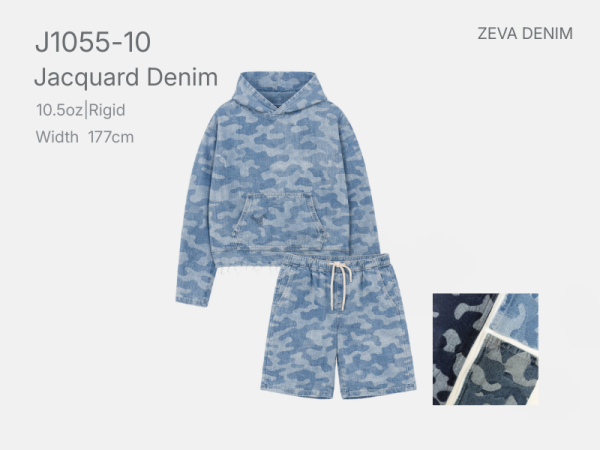
One example of this modular approach can be seen in a development like
J1055-10 — Patchwork Puzzle,
where irregular blocks are constructed into a rhythmic surface,
creating a youthful and experimental texture suitable for modern denim applications.
 Vietnamese
  English
  Russian
  Spanish
  Arabic
  French