
PART 1
Decoding “Ascending Crane” in Chenille Jacquard Denim
Why This Design Is Worth Attention — When Denim Starts Becoming More Emotional
For a long time, most statement denim followed a similar logic:
- stronger contrast
- louder graphics
- more visible washing effects
But in recent seasons, another direction has started gaining momentum — especially in women’s wear and premium casual denim.
Denim is becoming softer emotionally.
Not softer in construction alone,
but softer in atmosphere.
This is exactly why designs like “Ascending Crane” are becoming increasingly relevant.
Unlike aggressive vintage textures or oversized graphics, this type of chenille jacquard creates impact through:
- movement
- softness
- layered texture
- emotional storytelling
The visual focus is not on a specific subject, but on a feeling.
The crane appears as if rising into the air,
while delicate floral detailing softens the movement around it.
The result feels fluid rather than decorative.
In modern denim, this difference matters.
Because consumers are increasingly drawn to fabrics that feel:
- calm instead of loud
- layered instead of direct
- emotional instead of purely visual
Especially in FW26/27,
where “quiet detail” is replacing obvious statement design in many premium collections.
The Cultural Origin of Crane Imagery — From Eastern Symbolism to Modern Fashion Language
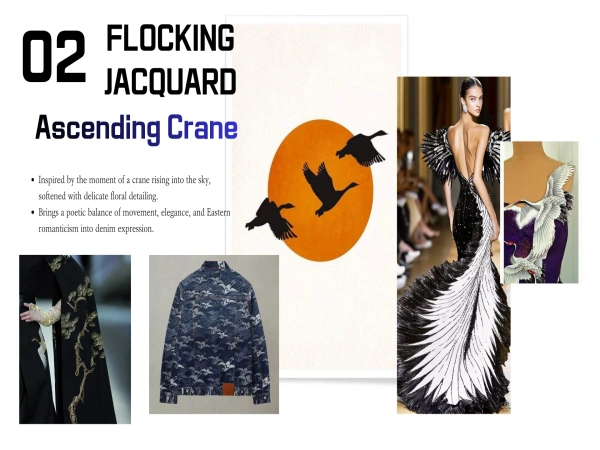
The crane carries deep symbolic meaning across East Asian culture, particularly in:
- China
- Japan
- Korea
Historically, cranes represented:
- elegance
- longevity
- spiritual freedom
- nobility
- peaceful strength
In traditional Chinese visual culture,
the image of a flying crane often symbolized ascension, hope, and refined beauty.
It appeared frequently in:
- silk embroidery
- porcelain art
- landscape paintings
- ceremonial garments
But historically, these expressions were often highly decorative and formal.
What is changing now is the reinterpretation.
Modern fashion is no longer using crane imagery as a traditional cultural ornament.
Instead, the crane becomes:
- atmosphere
- movement
- emotional texture
That shift is important.
Because contemporary consumers often respond better to symbolic emotion than explicit storytelling.
In fabrics like this,
the crane is not designed to dominate the surface.
It is integrated softly into the jacquard structure, allowing the feeling of motion to become more important than motif recognition itself.
Why Eastern Poetic Aesthetics Are Returning in Fashion Again
Since around 2023,
global fashion has shown growing interest in what many trend analysts describe as:
- quiet oriental aesthetics
- poetic minimalism
- emotional craftsmanship
- softened romanticism
This movement is especially visible in:
- womenswear
- premium casualwear
- modern resort collections
- elevated denim categories
One reason is consumer fatigue toward overly aggressive fashion language.
After years of:
- maximal graphics
- loud branding
- digital-inspired visuals
many consumers are now drawn toward products that feel:
- slower
- softer
- emotionally calming
- culturally layered
This is why subtle Eastern-inspired elements are reappearing —
but in a more restrained and wearable way than before.
Not costume-like.
Not theatrical.
More integrated into material and surface behavior.
“Ascending Crane” fits naturally into this shift because it combines:
- symbolic movement
- floral softness
- tonal texture
- chenille tactility
without becoming visually overwhelming.
Why Chenille Changes the Feeling of This Design
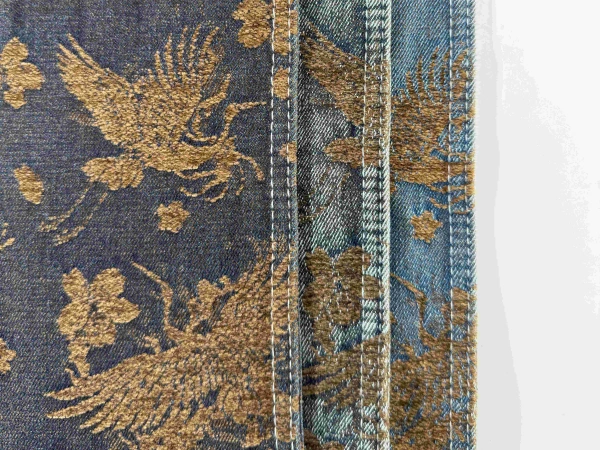
If this pattern were printed,
the emotional effect would be very different.
Chenille jacquard changes the experience because it introduces:
- softness in texture
- depth in light reflection
- subtle surface movement
- tactile warmth
This matters especially in autumn/winter denim.
Because chenille naturally creates:
- warmer visual perception
- softer emotional tone
- richer dimensionality
Compared with flat denim surfaces,
chenille reacts more actively with:
- lighting
- movement
- brushing
- washing
As a result,
the crane and floral detailing do not appear static.
They feel slightly alive within the fabric surface.
Visual Characteristics: Movement, Airiness, and Controlled Elegance
One reason this design works commercially is because it balances:
- elegance
- wearability
- texture
- softness
without becoming overly feminine or decorative.
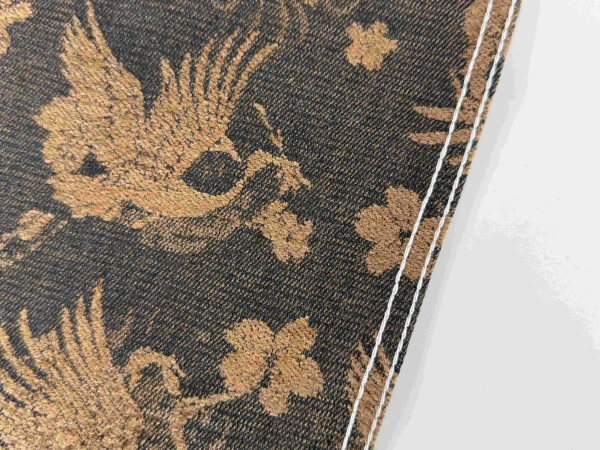
Key visual characteristics include:
1. Directional Movement
The crane-inspired composition creates upward visual flow.
This gives the fabric:
- lightness
- motion
- openness
rather than dense repetition.
2. Tonal Surface Layering
Instead of sharp color contrast,
the design relies on:
- chenille height variation
- tonal shifts
- shadow depth
This makes the surface feel refined rather than graphic-heavy.
3. Controlled Density
The pattern distribution remains breathable.
This is important because many floral-inspired jacquards fail commercially when:
- motifs become overcrowded
- surfaces feel visually heavy
- garments lose versatility
“Ascending Crane” avoids this by keeping the structure fluid and spaced.
Why This Type of Pattern Works Naturally on Denim
Not every elegant motif works well on denim.
Denim naturally:
- fades
- creases
- develops irregularity
Highly precise decorative patterns often lose clarity after washing.
But this type of chenille jacquard behaves differently.
Because:
- the movement is organic
- the floral detailing is softened
- the structure already contains irregularity
washing does not damage the design.
It enhances it.
The tonal fading created during garment washing adds:
- depth
- shadow variation
- layered softness
making the final garment feel more natural over time.
Closing Insight of Part 1
The value of “Ascending Crane” is not based on obvious visual impact.
Its strength lies in atmosphere.
It combines:
- Eastern poetic symbolism
- softened movement
- tactile texture
- emotional elegance
inside a denim structure that continues evolving after washing and wear.
In this direction,
chenille jacquard is no longer functioning simply as decoration.
It becomes a way for denim to express mood, softness, and material depth simultaneously.
PART 2
Chenille Jacquard Denim Market Analysis:
Why “Soft Texture Denim” Is Growing Again
Denim Is Becoming Emotionally Softer in FW26/27
One of the clearest shifts in recent denim development is the growing demand for “visual warmth.”
For many years, autumn/winter denim focused mainly on:
- rugged washing
- heavy vintage contrast
- workwear-inspired toughness
But in FW26/27, many brands are moving toward something softer:
- calmer texture
- warmer surfaces
- layered tactility
- emotionally comfortable materials
This change is especially visible in:
- womenswear
- premium casual collections
- modern vintage denim
- elevated everyday products
Consumers are increasingly attracted to denim that feels:
- less aggressive
- more refined
- softer visually
- easier to wear emotionally
Chenille jacquard fits naturally into this direction because it creates:
- depth
- warmth
- softness
- dimensional texture
without relying heavily on extreme washing.
Why More Brands Are Designing Through Fabric Itself
Another major shift is happening in product development:
Fabric itself is becoming part of the design language.
Previously:
- fabric acted as the base
- washing created most of the product identity
Now, brands increasingly want the fabric itself to carry:
- texture
- atmosphere
- emotional value
- differentiation
There are two reasons behind this change.
First, consumers are becoming visually fatigued by repetitive wash effects and similar-looking denim products.
Second, brands are trying to reduce dependence on:
- unstable washing results
- long development cycles
- excessive finishing costs
Texture-driven fabrics solve both problems at the same time.
Because part of the final visual richness is already built into the structure itself.
Why “Quiet but Detailed” Denim Is Becoming More Popular
Another important market direction is the rise of “low-volume design.”
After years of:
- oversized graphics
- logo-heavy products
- highly distressed denim
many consumers now prefer products that feel:
- quieter
- more wearable
- detail-oriented
- less trend-dependent
This is especially important in premium casual markets, where texture is increasingly replacing decoration.
Instead of creating impact through loud contrast,
brands are now using:
- tonal layering
- subtle surface variation
- tactile texture
- controlled irregularity
to create depth more naturally.
“Ascending Crane” fits particularly well into this movement because its visual effect comes from:
- movement instead of graphic sharpness
- softness instead of visual aggression
- atmosphere instead of decoration
Is Chenille Denim a Short-Term Trend?
At the moment, chenille denim behaves less like a short seasonal trend and more like part of a broader texture movement in modern denim.
Several structural changes are supporting its growth:
- rising demand for tactile products
- growth of premium casualwear
- stronger focus on material differentiation
- movement toward softer vintage aesthetics
Unlike novelty textures that depend heavily on visual impact, chenille jacquard works through:
- emotional warmth
- wearable texture
- long-term visual comfort
This gives it stronger commercial longevity, especially in autumn/winter collections.
Why Chenille Works Especially Well in Autumn/Winter Denim
FW collections naturally benefit from fabrics that create:
- warmth
- depth
- tactile richness
Flat denim can sometimes feel visually cold during winter merchandising.
Chenille changes this immediately.
Even before touching the garment, consumers often perceive chenille fabrics as:
- softer
- warmer
- more premium
- more comfortable
This psychological response is commercially valuable because it strengthens:
- first impression
- perceived quality
- emotional connection
before fit or washing details are even noticed.
Closing Insight of Part 2
The return of chenille denim is not only about texture.
It reflects a broader shift in how modern denim creates value.
Consumers increasingly want products that feel:
- softer
- calmer
- more layered
- emotionally wearable
At the same time, brands are searching for fabrics that can create differentiation directly from the material level.
Chenille jacquard fits both directions naturally.
Because it allows denim to communicate warmth, tactility, and subtle depth without relying on excessive decoration or aggressive washing.
PART 3
This Design Element in Practice:
Ascending Crane Chenille Jacquard in Denim
Where This Fabric Works Best
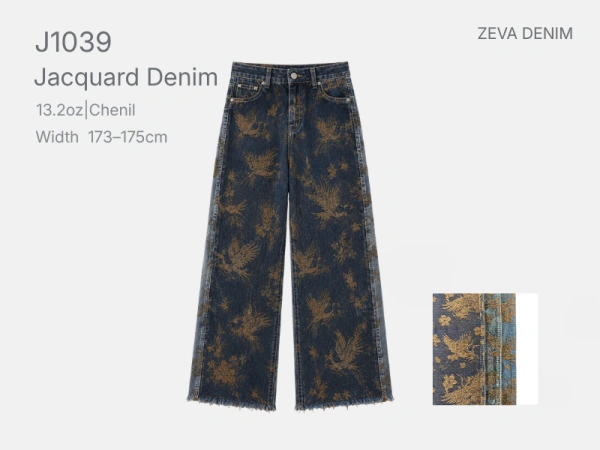
Unlike aggressive texture denim or heavy vintage jacquard, “Ascending Crane” performs best when the garment allows the fabric to remain fluid and breathable.
Its strength is not strong contrast.
It is emotional movement.
This makes it especially suitable for:
- womenswear denim
- elevated casualwear
- soft vintage collections
- resort-inspired denim products
particularly in:
- wide-leg jeans
- relaxed trousers
- lightweight jackets
- overshirts
- skirts
These silhouettes allow the crane-inspired movement and floral softness to remain visually continuous across the garment surface.
Why It Fits Current Trends So Naturally
One reason this design feels commercially relevant is because it aligns with multiple directions at the same time:
- quiet luxury
- modern oriental aesthetics
- premium retro
- soft vintage denim
- clean but layered styling
What these trends share is a preference for:
- atmosphere over decoration
- texture over loud graphics
- softness over visual aggression
“Ascending Crane” fits this naturally because the fabric creates elegance through:
- tonal movement
- chenille texture
- controlled spacing
- emotional softness
rather than through highly visible motifs.
What Makes This Pattern Different on Denim
When crane imagery is translated into denim, the key challenge is avoiding excessive decoration.
This fabric solves that problem through three elements:
1. Structure
The crane and floral elements are softened into the chenille jacquard itself rather than appearing as isolated graphics.
This creates:
- more fluid movement
- softer visual integration
- better compatibility with washing
2. Color Behavior
Instead of strong contrast, the fabric relies on:
- tonal depth
- shadow variation
- subtle fading interaction
This allows the design to remain elegant even after garment washing.
3. Density
The spacing remains breathable rather than crowded.
This is especially important in denim, where overly dense decorative patterns often reduce wearability and commercial versatility.
A Practical Advantage for Buyers
Another advantage of this type of chenille jacquard is that it creates visual richness without requiring overly complicated garment design.
Because the texture already carries part of the emotional expression, brands can maintain:
- simpler silhouettes
- cleaner styling
- more stable washing programs
while still achieving differentiated products.
For buyers, this helps balance:
- design value
- commercial wearability
- development efficiency
Closing Insight of Part 3
The value of “Ascending Crane” is not based on obvious statement design.
Its strength lies in balance:
- movement and softness
- elegance and wearability
- texture and restraint
This allows the fabric to feel expressive without becoming visually overwhelming — an increasingly important direction in modern premium denim.
PART 4 — Closing
When Denim Starts Communicating Through Atmosphere
One of the biggest shifts in modern denim is that products no longer rely only on washing or graphics to create identity.
Increasingly, atmosphere itself is becoming part of the value.
Fabrics like “Ascending Crane” reflect this direction clearly.
Instead of creating impact through loud decoration, the fabric builds emotion through:
- movement
- texture
- softness
- subtle symbolic layering
In this way, chenille jacquard becomes more than decoration.
It becomes part of how denim communicates feeling.
One example of this approach can be seen in J1039, where crane-inspired movement and delicate floral chenille texture are integrated directly into the denim surface to create a softer and more poetic interpretation of modern textured denim.
If you are exploring how emotionally layered texture could fit into future collections, it is often worth observing not only how the fabric looks before washing — but how it behaves after washing, movement, and repeated wear.
 English
  Russian
  Spanish
  Arabic
  French
  Vietnamese