
Introduction
China has long been a global hub for textile and apparel manufacturing, and when it comes to denim, Chinese suppliers offer a unique mix of cost-effectiveness, production capacity, and innovation. But for international buyers—whether you’re a brand owner, wholesaler, or garment factory—knowing how to properly place orders with Chinese denim manufacturers is essential to ensure product quality, delivery speed, and overall sourcing success.
This article provides a complete beginner-to-intermediate guide on working with denim manufacturers in China. It covers everything from how to find the right supplier, sample development, quotation evaluation, and order confirmation to logistics and after-sales. It also introduces trade terms like FOB and CIF and explains customs-related considerations.
This article is divided into the following sections:
1. Understanding the Advantages of Sourcing Denim from China
2. How to Identify the Right Chinese Denim Manufacturer
3. Communicating Your Requirements Clearly
4. Requesting Samples: What to Expect
5. Evaluating Prices and Terms (MOQ, Lead Time, Payment)
6. Understanding Trade Terms: FOB, CIF, EXW Explained
7. Confirming the Order and Placing a Deposit
8. Production and Quality Control
9. Shipping and Customs: Freight, Documents & Clearance
10. After-Sales Service and Long-Term Cooperation
11. Featured Supplier: ZEVA DENIM
1. Understanding the Advantages of Sourcing Denim from China
China remains one of the most reliable sources for denim fabric due to:
– Advanced technology & machinery: Many mills operate with modern looms like Picanol or Tsudakoma.
– Full supply chain: From cotton spinning to weaving, dyeing, and finishing—everything can be handled within the country.
– Cost competitiveness: Prices are often lower than Western markets, especially for large orders.
– Product variety: Suppliers offer everything from stretch denim and rigid denim to jacquard and printed styles.
Moreover, most Chinese denim suppliers have experience working with international brands, making communication and production smoother.
2. How to Identify the Right Chinese Denim Manufacturer
Not all denim suppliers are created equal. Look for manufacturers that have:
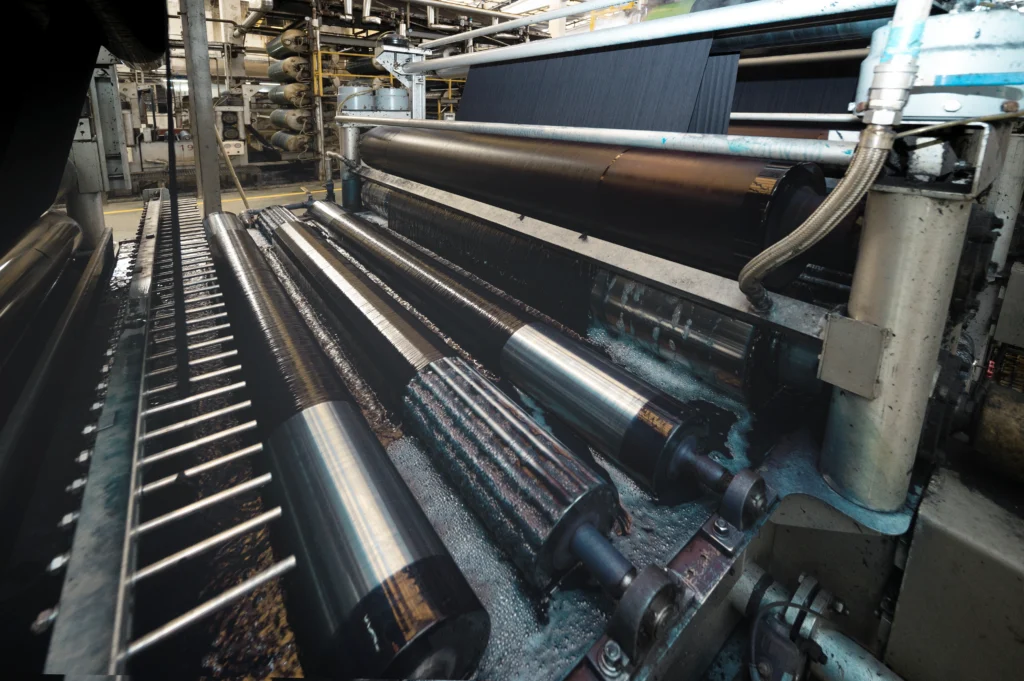
– Their own factory (not just a trading company)
– A wide product range and customization capability
– Certifications like Oeko-Tex, GOTS, or BCI for sustainable production
– A proven export track record
– Fast sampling and small MOQ options if you are testing the market
3. Communicating Your Requirements Clearly
Once you’ve shortlisted suppliers, prepare a clear specification sheet. Include:

– Fabric type (e.g. stretch denim, rigid, twill direction)
– Composition (cotton %, polyester %, elastane %, etc.)
– Weight (in oz or gsm)
– Width (e.g. 58/60” or 150cm)
– Color/shade or Pantone number
– Intended usage (e.g. jeans, shirts, jackets)
Also, provide fabric swatches or photos if you’re trying to replicate a style. The clearer your communication, the more accurate the sample and quotation.
4. Requesting Samples: What to Expect
Sample development is a crucial step. You may ask for:
– Stock swatches: Usually free or with minimal courier cost
– Custom lab dips or strike-offs: For new colors, patterns, or finishes
– Washed swatches: If wash results are important (e.g. stone-wash, bleach)
Some suppliers require a sampling fee (refundable upon order), especially for small-volume buyers. Samples typically ship via DHL, FedEx, or SF Express.
5. Evaluating Prices and Terms (MOQ, Lead Time, Payment)
When you receive a quote, check for:
– MOQ (Minimum Order Quantity): For Chinese denim mills, it’s usually 3000m for stock fabrics and 5000–8000m for custom fabrics.
– Lead time: In-stock fabrics ship in 5–7 days; customized items take 20–35 days.
– Payment terms: T/T (bank transfer) is most common—30% deposit, 70% balance before shipment.
– Additional fees: Dyeing surcharge, special packaging, or development fees.

Recommendations:
– Don’t just compare unit prices—consider total landed cost including shipping, taxes, and MOQ impact.
– Compare quotes using the same specifications to ensure fairness.
– Clarify whether prices include VAT, domestic freight, or port handling charges.
6. Understanding Trade Terms: FOB, CIF, EXW Explained
Trade terms (Incoterms) define who is responsible for shipping, insurance, and customs. The most common terms are:
– FOB (Free on Board): The supplier delivers goods to a named port in China (e.g. FOB Guangzhou). The buyer arranges shipping, insurance, and destination clearance. Most recommended for experienced importers.
– CIF (Cost, Insurance, and Freight): The supplier arranges shipping to your destination port and includes basic insurance. The buyer clears customs at destination. Best for beginners who want simplicity.
– EXW (Ex Works): Buyer collects goods at the factory and handles everything else including export clearance. High-risk, suitable only for those with local agents.
Tip: FOB is often the best balance between cost and control for international denim buyers.
7. Confirming the Order and Placing a Deposit
Once all specifications, prices, and terms are finalized, the supplier issues a Proforma Invoice (PI). The steps are:
1. Double-check all order details on the PI, including quantity, color, specs, delivery terms, and bank info.
2. Sign and return the PI.
3. Arrange a 30% deposit via bank transfer (T/T) and send the payment slip to secure your production slot.
4. The supplier begins production or schedules materials accordingly.
Note: For special colors or finishes, reconfirm sample swatches (lab dips or strike-offs) before bulk production.
8. Production and Quality Control
During production, responsible suppliers provide:
– Regular updates on yarn status, weaving progress, dyeing, and finishing
– Photos or videos from the production floor
– Internal or third-party inspection reports (e.g. SGS, Intertek)
– Optional lab testing (colorfastness, shrinkage, pH value, etc.) for strict clients
For large orders or high-value garments, consider using an independent quality inspection service before shipment.
9. Shipping and Customs: Freight, Documents & Clearance
After final payment (usually the 70% balance), the supplier arranges shipment and provides the necessary documents:
– Commercial Invoice
– Packing List
– Bill of Lading (sea freight) or Airway Bill (air)
– Certificate of Origin (CO)
– Fumigation certificate, if required
These are needed for import customs clearance in your country.
Freight Modes:
– LCL (Less than Container Load): Economical for small orders but higher per-unit freight cost.
– FCL (Full Container Load): Recommended for large-volume orders.
– Air Freight: Quick but costly, typically used for urgent samples.
You may use your freight forwarder or ask the supplier for a recommended one.
10. After-Sales Service and Long-Term Cooperation
A reliable denim supplier offers support even after delivery:
– Follow-up on how the fabric performs in cutting, washing, and sewing
– Offer styling advice or alternative options
– Suggest trending new fabrics for upcoming seasons
Long-term partners benefit from:
– Priority production slots
– Exclusive fabric development
– Volume-based pricing and market-specific fabric suggestions
11. Featured Supplier: ZEVA DENIM
One highly regarded denim supplier in China is ZEVA DENIM. Based in Foshan, ZEVA is a vertically integrated factory that combines R&D, manufacturing, and marketing. They specialize in:
– Over 200 denim fabrics, including stretch, rigid, printed, and jacquard denim
– Quick delivery for in-stock fabrics—most orders ship within 7 days
– Low MOQ: 3000m for stock, 5000–8000m for custom
– Global exports: ZEVA DENIM serves clients across all major markets worldwide without limitation, offering reliable support to customers from Southeast Asia, the Americas, Europe, Africa, and beyond.
– Sustainable certifications: Organic Cotton, Recycled Polyester, BCI, and Oeko-Tex available
Whether you’re sourcing denim for jeans, jackets, workwear, or fashion garments, ZEVA DENIM offers both variety and technical expertise. Learn more at https://www.zevadenim.com/.
Conclusion
Placing denim orders with Chinese manufacturers is a strategic move for many brands and buyers—provided you understand the process and manage it professionally. From selecting the right supplier and understanding trade terms to managing sampling and logistics, each step plays a key role in successful sourcing.
By partnering with reliable suppliers like ZEVA DENIM, you gain not just fabric—but a long-term solution partner who can support your growth in the competitive fashion market.

 French
  English
  Russian
  Spanish
  Arabic
  Vietnamese