
PART 1 — Design Element Breakdown
From Flat Stripes to Textured Stripe Direction in Needle-Punched Denim
Why This Design Is Worth Attention
Stripe denim has always been a classic category in the denim market. From railroad stripes to dobby stripes and yarn-dyed stripes, vertical direction has long been used to create structure and elongation in garments. However, traditional stripes rely mainly on color contrast or weave variation, which can appear flat and predictable.
G1009-705117 introduces a different approach.
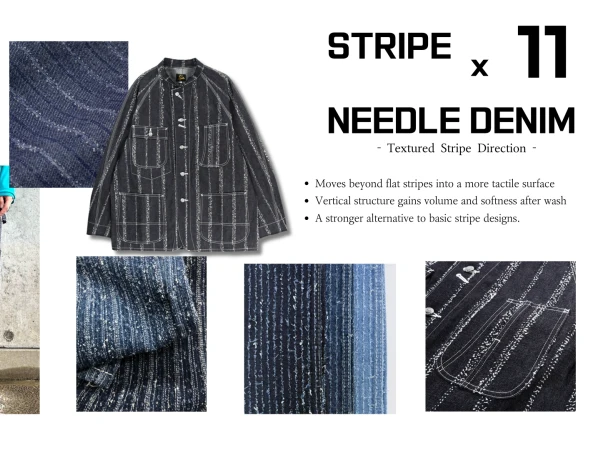
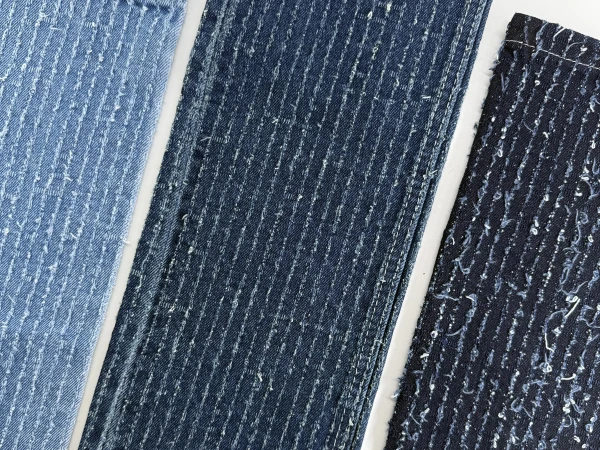
Instead of relying on color or weave contrast, this design creates textured stripe direction through needle-punched structure. The vertical lines are not printed or woven as contrast stripes — they emerge from tactile surface relief. This transforms stripes from graphic elements into structural texture.
This shift is important.
Flat stripes are visual.
Textured stripes are material-driven.
This gives designers more flexibility. The fabric remains subtle at distance, but reveals depth at close range. The result is a stripe denim that feels modern, less decorative, and more wearable.
This type of stripe denim is increasingly relevant in:
modern workwear
minimalist denim
clean directional jeans
unisex collections
Because the pattern is tonal and textural, it does not compete with garment design. Instead, it enhances structure.
Stripe Pattern Origin and Evolution
Stripe denim originated in industrial workwear fabrics. Railroad stripes and hickory stripes were used historically for durability and visual identity. These stripes were usually yarn-dyed or woven with high contrast.
Later, stripe denim evolved into:
pinstripe denim
dobby stripe denim
slub stripe denim
These introduced more subtle variations, but still relied on visual contrast.
The next stage is textured stripe denim, where stripes are formed through surface relief rather than color difference. Needle-punched techniques allow vertical structure to be created without heavy weave changes.
This modern reinterpretation reflects broader fashion movement:
less contrast
more texture
subtle structure
material-driven design
G1009-705117 fits within this evolution. The stripe remains vertical, but gains softness and volume after washing, creating a more organic look.
Cultural Meaning — Structure and Direction
Vertical stripes traditionally symbolize order, structure, and elongation. In denim, they often communicate workwear heritage.
Textured vertical stripes reinterpret this meaning.
Instead of rigid lines, the needle-punched structure softens edges. This creates a more relaxed interpretation of structure — directional but not strict.
This balance is important for modern denim.
Too rigid → formal appearance
Too soft → no direction
Textured stripe denim creates:
soft structure
casual direction
modern workwear feel
This makes it suitable for both fashion and commercial denim.
Visual Characteristics of G1009-705117
This needle-punched stripe denim shows several key visual properties.
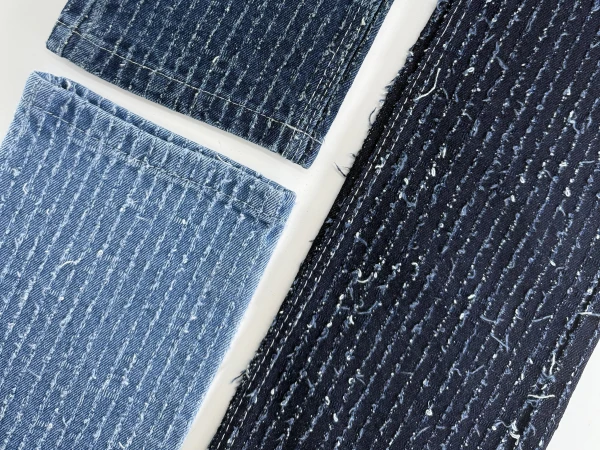
Vertical texture direction
needle-punched lines create structure
Low contrast tonal surface
same-color denim base
Soft volume after washing
texture becomes more dimensional
Tactile stripe effect
visible and touchable relief
Distance perception
From distance
clean vertical denim
From close
visible textured stripe surface
This dual effect increases versatility.
Why Textured Stripes Work Better Than Flat Stripes
Flat stripes can look too graphic. They may also restrict garment styling.
Textured stripes behave differently.
They add depth without adding contrast.
They support garment structure.
They evolve after washing.
This makes textured stripes more adaptable for modern denim products.
PART 2 — Needle-Punched Denim Industry Analysis
Washing and Finishing Influence
What Washing Works Best for Needle Denim
Needle-punched denim relies on surface relief. Washing processes influence how this relief appears.
Suitable washing types include:
enzyme wash
light stone wash
soft vintage wash
rinse wash
These processes enhance texture without damaging structure.
Heavy bleach wash may flatten texture.
Strong sanding may break stripe continuity.
Therefore, moderate washing is preferred.
Enzyme Wash Influence on Needle Texture
Enzyme wash softens fiber surface and removes fuzz. This improves clarity of needle-punched structure.
Effects include:
cleaner stripe definition
softer handfeel
enhanced micro contrast
Because enzyme wash removes surface hairiness, the vertical needle texture becomes more visible.
Stone Wash Effect on Textured Stripes
Stone washing introduces abrasion. For textured stripe denim, this creates depth.
Light stone wash:
enhances stripe relief
adds natural variation
Heavy stone wash:
softens edges
reduces definition
Therefore, light to medium stone wash works best.
Light Wash vs Heavy Wash Difference
Light wash
keeps structure sharp
clean stripe appearance
Medium wash
adds softness
balanced vintage look
Heavy wash
reduces stripe clarity
more casual surface
G1009-705117 performs best under light to medium washing.
How to Predict Wash Result
Several factors determine wash outcome:
needle depth
fabric weight
yarn type
indigo depth
Deeper needle structure
more visible after wash
lighter indigo
softer stripe contrast
heavier denim
stronger relief effect
These parameters help predict final appearance.
PART 3 — Application Analysis of G1009-705117
Garment Applications
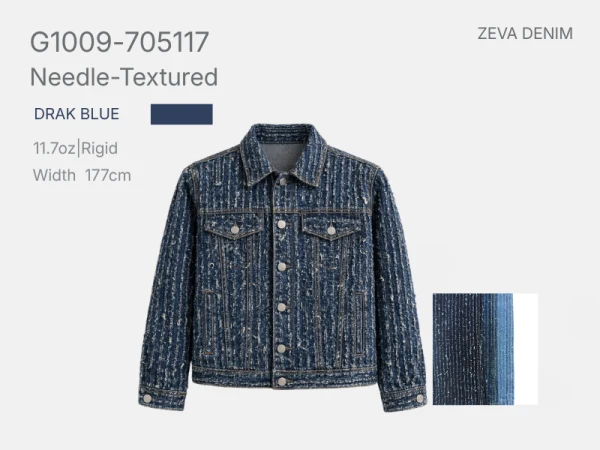
This textured stripe denim works across multiple categories.
Menswear
straight jeans
workwear pants
utility jackets
Womenswear
wide leg jeans
denim skirts
relaxed jackets
Unisex
loose fit jeans
overshirts
denim sets
Vertical direction enhances garment silhouette.
Trend Alignment
This design aligns with current denim directions:
clean structured denim
modern workwear denim
minimal texture denim
retro stripe revival
Because stripes are tonal, the fabric supports both fashion and commercial programs.
Difference When Combined With Denim
Compared with traditional stripe denim, this design behaves differently.
Structure
needle-punched vertical relief
لون
tonal indigo surface
Density
soft stripe spacing
Effect
three-dimensional stripe denim
This creates a more modern alternative to flat stripe fabrics.
PART 4 — Closing
Stripe denim continues to evolve from graphic contrast toward structural texture. Needle-punched textured stripes represent this transition, offering directional surface design without heavy visual contrast.
G1009-705117 demonstrates this approach through vertical textured stripes that gain softness and volume after washing. The result is a modern stripe denim that feels structured yet relaxed, making it suitable for contemporary denim collections.
This type of textured stripe direction provides a stronger alternative to basic stripe designs while maintaining versatility across garments and washing techniques.
A Three-Dimensional Evolution of Stripe Denim-Video
 Arabic
  English
  Russian
  Spanish
  French
  Vietnamese