
Why Paisley Is Returning Through Texture-Driven Denim Development
As Chenille denim product development becomes increasingly sophisticated, differentiation is no longer driven solely by washing effects, distressing techniques, or seasonal colors. Instead, more brands are investing in fabrics that can communicate identity before a garment even enters the wash room. This shift has created new opportunities for texture-driven denim, particularly chenille jacquard constructions that combine visual storytelling with tactile depth.
Soft Heritage represents one example of this evolution.
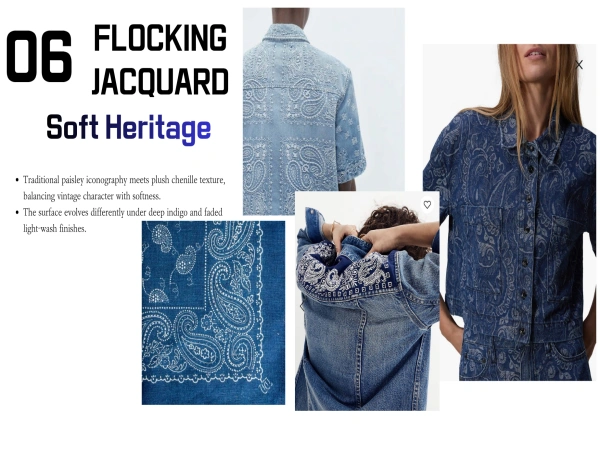
Inspired by traditional paisley iconography and interpreted through plush chenille texture, the design balances vintage character with modern softness. Rather than relying on loud graphics or heavy ornamentation, it uses texture, density, and heritage symbolism to create a more refined statement.
In this article, we will explore:
- Why paisley continues to cycle back into fashion and denim
- How modern paisley differs from traditional heritage applications
- Why texture-driven denim is becoming increasingly important for fast-response product development
- How fabric selection now influences collection structure and product hierarchy
- Why more brands are choosing fabrics before silhouettes
- How chenille denim can strengthen assortment planning and capsule collections
Rather than simply examining a pattern, this article explores how heritage motifs are being reinterpreted through contemporary denim development strategies.
PART 1
Decoding Chenille Denim Soft Heritage — The Evolution of Paisley in Modern Denim
Why This Design Is Worth Attention
Few textile motifs have demonstrated the longevity of paisley.
While countless prints rise and disappear with each fashion cycle, paisley has survived for centuries because it sits at the intersection of decoration, symbolism, and cultural heritage.
For many consumers, paisley immediately communicates:
- craftsmanship
- artistry
- vintage character
- sophistication
Yet despite its long history, paisley has rarely been a dominant motif in denim.
Historically, it appeared more frequently in:
- scarves
- shawls
- shirting
- accessories
- luxury textiles
Today, however, denim is becoming an increasingly important platform for heritage-inspired motifs.
The reason is simple.
Consumers are looking for alternatives to generic floral patterns and repetitive geometric designs.
They want products that feel familiar, but not predictable.
Paisley offers exactly that balance.
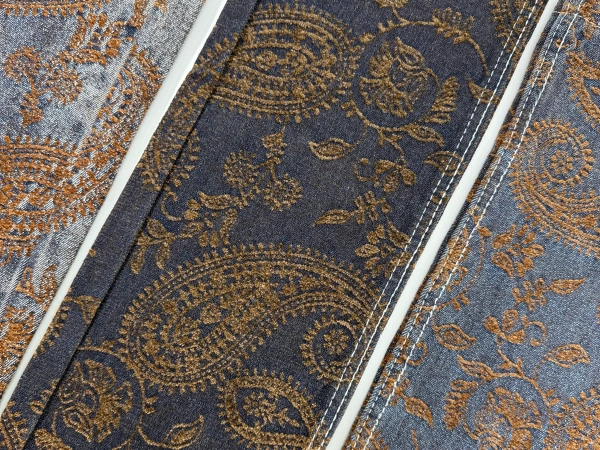
Soft Heritage takes this concept further by integrating paisley directly into a chenille jacquard structure, transforming a decorative motif into a texture-driven surface experience.
The result feels less like a printed pattern and more like a woven narrative embedded within the fabric itself.
The Origins of Paisley — From Persia to Global Fashion
The origins of paisley can be traced back more than 2,000 years.
Its earliest ancestor is believed to be the Persian “boteh” motif, a curved teardrop-like shape that appeared in textiles, architecture, ceramics, and decorative arts.
The boteh traditionally symbolized:
- life
- eternity
- growth
- prosperity
Through trade routes connecting Persia and India, the motif became deeply integrated into Kashmiri textile traditions.
By the 18th century, luxurious Kashmiri shawls featuring boteh patterns became highly desirable across Europe.
The town of Paisley in Scotland eventually became one of the largest producers of these patterned textiles.
As production expanded throughout the nineteenth century, the motif gradually became known worldwide as “paisley.”
Few textile patterns possess such a truly international heritage.
Its journey across Persia, India, Britain, and eventually global fashion contributes significantly to its enduring appeal.
Paisley has experienced several major periods of popularity.
Victorian Era
During the nineteenth century, paisley represented luxury and sophistication.
Highly detailed woven shawls became status symbols throughout Europe.
Counterculture Movement of the 1960s and 1970s
Paisley experienced a dramatic revival through:
- psychedelic fashion
- bohemian aesthetics
- artistic expression
This period permanently connected paisley with creativity and individuality.
Heritage Revival (2015–Present)
Over the last decade, luxury brands and premium fashion labels have increasingly revisited heritage motifs.
Unlike earlier interpretations, modern paisley has become:
- more tonal
- more textural
- less decorative
- more material-focused
This shift makes it particularly compatible with contemporary denim.
Why Modern Paisley Feels Different
Traditional paisley applications focused heavily on visual richness.
The goal was to maximize decorative impact.
Modern fashion takes a different approach.
Today’s paisley developments emphasize:
- texture
- proportion
- spacing
- material quality
Instead of asking:
“How much decoration can this motif create?”
Designers increasingly ask:
“How can this motif improve the fabric itself?”
This philosophy aligns perfectly with chenille denim.
The paisley pattern is no longer merely applied onto the surface.
It becomes part of the fabric construction.
This creates a deeper and more sophisticated result.
Cultural Meaning — Why Paisley Never Truly Disappears
One reason paisley remains relevant is its symbolic flexibility.
Different cultures interpret the motif differently.
Persian traditions associate it with:
- fertility
- life
- continuity
Indian traditions often connect it with:
- spirituality
- abundance
- prosperity
Western fashion frequently links paisley with:
- artistic freedom
- individuality
- heritage
Unlike trend-driven graphics, paisley carries meaning without being restricted to a single era or consumer group.
This adaptability explains why it repeatedly returns during periods when fashion seeks authenticity and cultural depth.
Visual Characteristics of Soft Heritage
Several visual features define the design.
Enlarged Paisley Motifs
The pattern uses a larger scale than traditional paisley textiles.
This creates:
- improved readability
- stronger visual identity
- contemporary proportions
The result feels modern rather than nostalgic.
Controlled Pattern Density
Paisley naturally contains intricate detail.
However, spacing remains carefully balanced.
This creates:
- visual breathing room
- cleaner garment appearance
- easier styling versatility
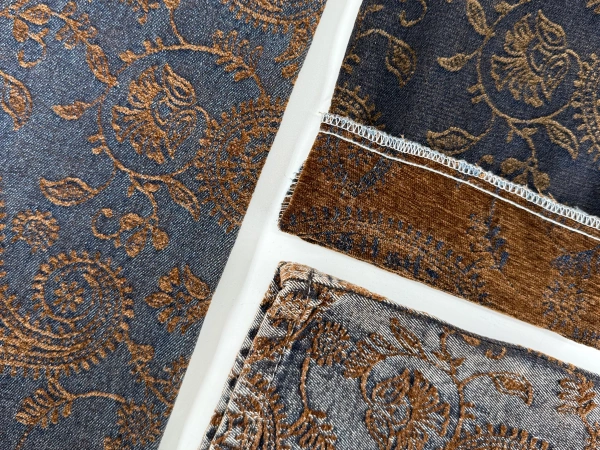
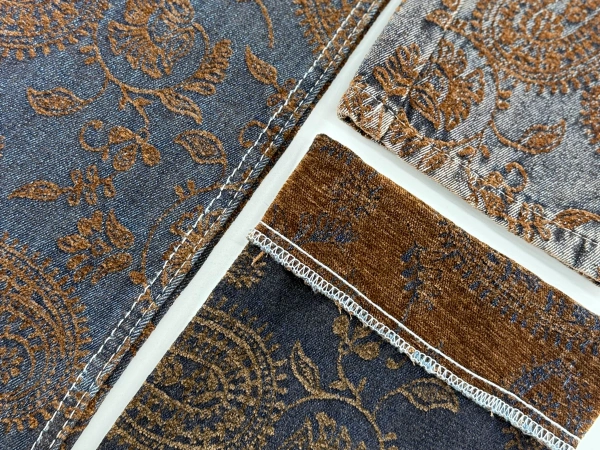
Chenille Denim Surface Texture
The most important characteristic is texture.
Chenille construction introduces:
- dimensional depth
- softness
- light variation
- tactile richness
The motif therefore remains interesting even when viewed from a distance or after repeated washing.
Why Paisley Works Surprisingly Well on Denim
Many heritage patterns struggle when translated into denim because denim changes constantly.
It fades.
It washes down.
It evolves through wear.
Paisley benefits from this process.
As indigo ages:
- texture becomes more visible
- contrast develops naturally
- surface depth increases
Rather than deteriorating, the pattern gains character.
This compatibility makes paisley particularly effective for texture-driven Chenille denim development.
Closing Insight of Part 1
Soft Heritage demonstrates how a centuries-old motif can remain commercially relevant through modern fabric engineering.
Its success is not simply about paisley.
It is about how paisley is reinterpreted through texture.
The result reflects a broader shift occurring throughout Chenille denim:
- from graphics to materiality
- from decoration to depth
- from trend-driven design to heritage-driven innovation
PART 2
Development Logic & Product Structure — Why Texture Denim Is Becoming a Strategic Category
Why Texture Denim Works Better for Small-Batch Fast Development
Traditional denim often depends on washing, trims, embroidery, or printing to create differentiation.
These processes add complexity and increase development timelines.
Texture denim works differently.
The fabric itself already contains visual identity.
This allows brands to:
- reduce development steps
- shorten sampling cycles
- launch smaller programs faster
For capsule collections and fast-response projects, texture-driven fabrics provide immediate product differentiation without extensive garment engineering.
This is one reason specialty denim categories continue gaining attention.
Why Specialty Fabrics Are Becoming More Important for Capsule Collections
Modern capsule collections typically focus on:
- limited quantities
- strong identity
- higher perceived value
Specialty fabrics align naturally with these objectives.
A distinctive fabric can create an entire capsule theme without requiring multiple complex garment treatments.
Paisley chenille denim works particularly well because it combines:
- heritage storytelling
- visual richness
- tactile differentiation
within a single material platform.
How Chenille Denim Fabric Determines Product Hierarchy
Not all garments play the same role within a collection.
Most assortments contain:
Core Products
- basic denim
- everyday essentials
- volume drivers
Statement Products
- fashion pieces
- seasonal highlights
- image builders
Fabric often determines which category a product belongs to.
A standard denim may rely on silhouette.
A specialty denim already possesses built-in differentiation.
Soft Heritage naturally occupies the second category.
The chenille denim fabric itself contributes significantly to the perceived value of the final garment.
Why More Brands Select Fabric Before Designing Garments
Historically, brands often designed garments first and selected fabrics later.
Today, the process is increasingly reversed.
Many designers now begin with material exploration.
The reason is simple.
Consumers increasingly notice:
- texture
- handfeel
- surface depth
before construction details.
When a fabric already possesses strong identity, garment development becomes more efficient.
The material guides the design process rather than simply supporting it.
How Chenille Denim Improves Collection Completeness
One challenge in assortment planning is creating variation without creating confusion.
Chenille denim helps solve this problem.
Within a collection, it can function as:
- hero product fabric
- capsule fabric
- texture layer
- seasonal highlight
When combined with basic rigid denim and stretch denim programs, chenille fabrics create stronger visual hierarchy and assortment balance.
This contributes to a more complete collection architecture.
Closing Insight of Part 2
Texture denim is no longer simply a niche category.
It has become a strategic tool for modern collection development.
As brands seek faster development, stronger differentiation, and more compelling capsule programs, texture-driven fabrics are becoming increasingly valuable.
And chenille denim sits at the center of this shift.
PART 3
This Design Element in Practice — Paisley Chenille Denim in Modern Collections
Where This Fabric Works Best
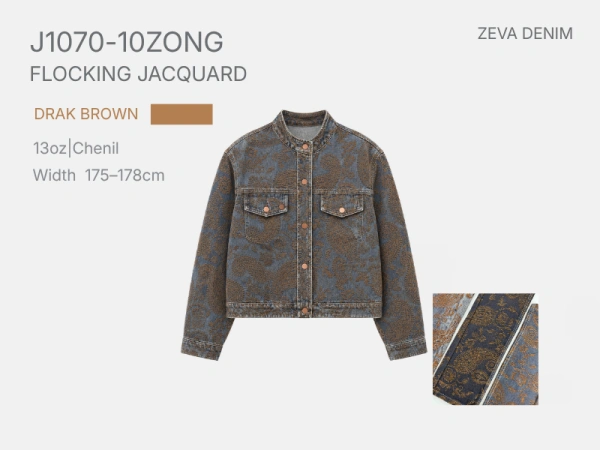
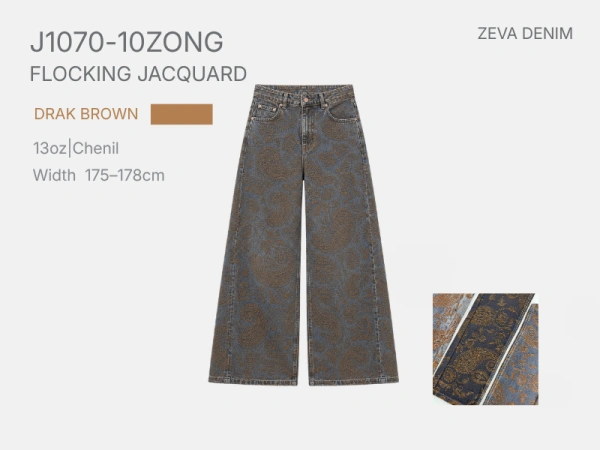
Based on its structure and visual scale, Soft Heritage performs best in non-stretch silhouettes that allow the pattern to remain visible.
Most suitable applications include:
Women’s wear:
- wide-leg jeans
- straight-leg jeans
- denim skirts
- overshirts
- fashion jackets
- matching sets
Lifestyle-focused menswear:
- relaxed overshirts
- chore jackets
- casual outerwear
The pattern naturally aligns with consumers seeking heritage-inspired fashion.
Trend Alignment — Why It Fits Today’s Market
Soft Heritage aligns with several important trend directions.
Heritage Revival
Consumers increasingly value products connected to history and craftsmanship.
Quiet Luxury
The fabric communicates sophistication through texture rather than logos.
Elevated Vintage
Vintage references remain present, but the execution feels modern.
Texture-Driven Fashion
Material depth increasingly replaces graphic intensity as a source of differentiation.
What Makes Paisley Different on Denim
Three factors distinguish this fabric from traditional paisley textiles.
Structure
The motif is woven into the material rather than printed.
Color Evolution
Deep indigo and light-wash finishes create dramatically different appearances.
This increases design versatility.
Density
The enlarged motifs create clarity without overcrowding the surface.
The pattern feels sophisticated rather than decorative.
Closing Insight of Part 3
Soft Heritage succeeds because it balances:
- history and modernity
- texture and clarity
- familiarity and innovation
It transforms a well-known motif into a contemporary denim surface that feels both timeless and relevant.
PART 4
Closing Insight — When Heritage Becomes a Development Strategy
As denim continues evolving, the most successful specialty fabrics are not necessarily the loudest.
Increasingly, they are the fabrics that combine:
- cultural familiarity
- tactile richness
- development efficiency
Soft Heritage demonstrates this principle clearly.
By combining traditional paisley iconography with chenille texture, it creates a material that feels simultaneously historical and contemporary.
For brands, this type of fabric offers more than aesthetic value.
It provides:
- stronger storytelling
- improved collection hierarchy
- faster product differentiation
- greater capsule potential
In many ways, the future of specialty denim may not depend on discovering entirely new motifs.
It may depend on reinterpreting timeless motifs through new material technologies.
Soft Heritage is one example of how that future is already taking shape.
 Russian
  English
  Spanish
  Arabic
  French
  Vietnamese