
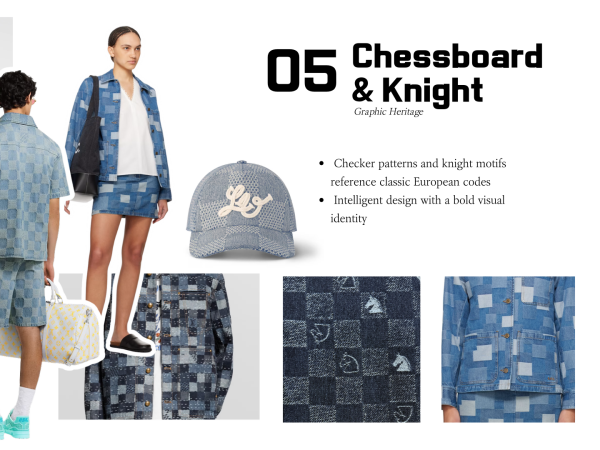
Jacquard denim is increasingly shifting from decorative texture to narrative structure. Among emerging directions, chessboard and knight motifs represent a particularly distinctive category. Unlike florals or paisley, these patterns rely on geometry, contrast, and symbolic references. The J1052 jacquard denim introduces a chessboard structure combined with knight motifs, creating a visually bold yet controlled surface.
This type of patterned jacquard denim stands out because it merges heritage symbolism with engineered repeat. The checker layout creates rhythm, while the knight element introduces figurative identity. Together, they form a fabric that communicates structure, intelligence, and clarity. More importantly, this kind of jacquard denim behaves differently in production, washing, and garment construction. Understanding these behaviors is essential for both design and risk management.
This article examines three dimensions of this chessboard jacquard denim:
• Decoding chessboard and knight design in jacquard denim
• Risk analysis in jacquard denim production and washing
• Industry application of chessboard jacquard denim pattern
PART 1 — Chessboard Jacquard Denim Design Analysis
Why Chessboard Patterned Jacquard Denim Is Worth Attention
Chessboard motifs bring structure into denim. Unlike organic patterns, checker layouts create visual order. This order allows bold patterns without appearing chaotic. In jacquard denim, this structure becomes even more defined because the pattern is woven rather than printed.
The addition of knight motifs introduces narrative. The knight is associated with intelligence, strategy, and movement. When combined with checker grids, the pattern feels deliberate rather than decorative. This gives the fabric a strong identity.
In modern denim collections, structured patterns are becoming more important. As washing techniques become widely accessible, differentiation increasingly depends on fabric design. Chessboard jacquard denim offers built-in visual contrast even before finishing. This reduces reliance on aggressive washing.
This is why chessboard jacquard denim is gaining relevance.
European Chessboard Motif Origin in Jacquard Denim Design
Checker patterns have long existed in European textiles. They appeared in medieval woven fabrics, heraldic banners, and traditional tailoring linings. These patterns symbolized order and hierarchy. The chessboard itself represents strategy and logic.
The knight motif originates from chess iconography. In fashion, chess elements appeared periodically in European collections, especially during retro revival phases. However, these were mostly printed. Jacquard construction introduces a new interpretation.
Instead of surface graphics, the chessboard becomes structural. The woven grid interacts with denim fading. The knight motif becomes embedded in the fabric rather than placed on top. This transforms the design from graphic to textile-based.
The modern reinterpretation shifts chess motifs from novelty to premium structured design.
Cultural Meaning of Chessboard and Knight Jacquard Denim
Chess symbolism communicates intelligence and balance. The alternating squares represent contrast and decision-making. The knight symbolizes movement within structure.
When translated into jacquard denim, these meanings evolve. The rugged nature of denim softens the symbolism. The result is a pattern that feels bold but wearable.
This aligns with current consumer preference for statement fabrics that remain practical. Rather than loud prints, woven structure creates sophistication. Chessboard jacquard denim delivers this balance.
Visual Characteristics of Chessboard Pattern Jacquard Denim
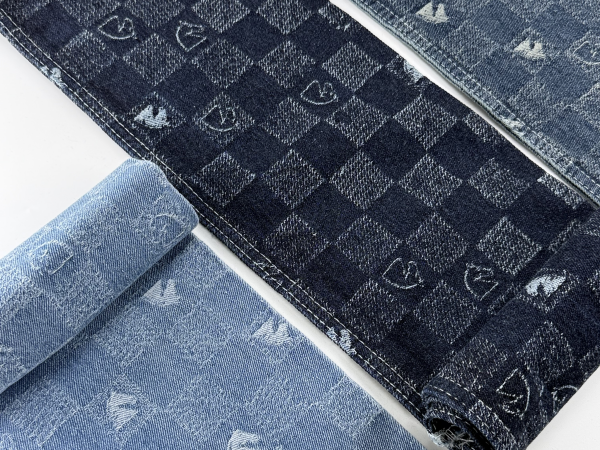
The defining feature of this jacquard denim is geometric contrast. The checker layout provides repeated structure, while the knight motif breaks uniformity.
Key visual elements include:
• checker grid rhythm
• figurative knight motif
• tonal jacquard contrast
• medium pattern density
• structured repeat layout
This combination creates a strong identity without excessive complexity.
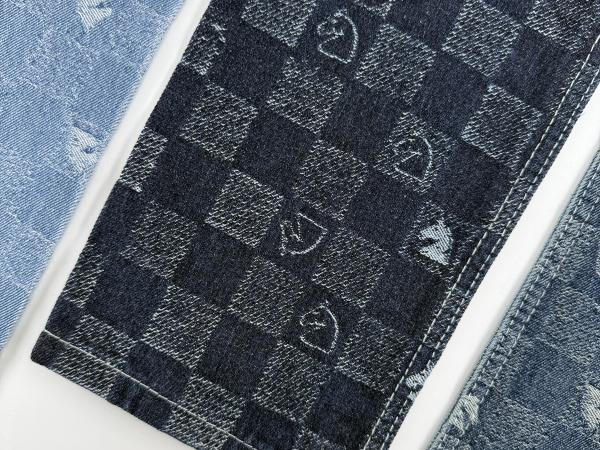
The pattern reads clearly from distance and reveals detail up close. This dual readability is particularly useful in denim garments.
PART 2 — Jacquard Denim Risk Analysis
Common Quality Risks in Chessboard Jacquard Denim Production
Jacquard denim introduces additional complexity compared to basic denim. Multiple yarn structures and weave variations increase production risk. For chessboard jacquard, contrast consistency becomes critical.
One common issue is uneven pattern clarity. Differences in yarn tension may cause certain squares to appear darker or lighter. This affects overall balance.
Another risk is structural distortion. During finishing, differential shrinkage between patterned and base areas may alter geometry. This is more noticeable in grid patterns than in organic designs.
Careful control of yarn selection and weaving tension reduces these risks.
Shrinkage Risk in Jacquard Denim Structure
Jacquard denim often contains varied weave densities. Dense areas shrink differently from open structures. In checker patterns, this can affect square alignment.
If elastic yarns are used, shrinkage complexity increases. Different yarn recovery rates can distort geometry after washing. This is particularly sensitive in structured patterns.
Pre-shrinking and controlled finishing help maintain consistency. Balanced weave density is also important.
Understanding shrinkage behavior is essential for chessboard jacquard denim.
Color Variation Risk in Multi-Tone Jacquard Denim
Multi-tone jacquard denim introduces color consistency challenges. Different yarns absorb indigo differently. During washing, contrast may increase unevenly.
In chessboard patterns, this becomes more visible. Adjacent squares may fade at different rates. While some variation adds depth, excessive difference reduces clarity.
Controlled dyeing and wash testing help manage this. Designers should anticipate contrast change during development.
Enhancing Chessboard Jacquard Denim Through Washing
Moderate enzyme wash enhances tonal contrast. This reveals checker structure without damaging pattern clarity. Light stone wash adds texture but must be controlled.
Selective PP spray can highlight certain areas, but uniform application may flatten the pattern. Laser can be used to emphasize geometry if aligned carefully.
The goal is to enhance structure rather than override it.
Common Failures in Jacquard Denim Washing and Solutions
Over-washing is the most common issue. Excessive abrasion reduces tonal layering. Checker patterns may become indistinct. Controlled washing solves this.
Another issue is uneven PP. Random fading breaks geometry. Targeted application preserves pattern integrity.
Bleaching may reduce contrast. Using mild oxidizing processes maintains structure.
Proper sampling before bulk production minimizes risk.
PART 3 — Chessboard Jacquard Denim Industry Application
Garment Applications for Chessboard Pattern Jacquard Denim
This type of jacquard denim works best in garments with large panels. The checker pattern requires continuity to remain readable.
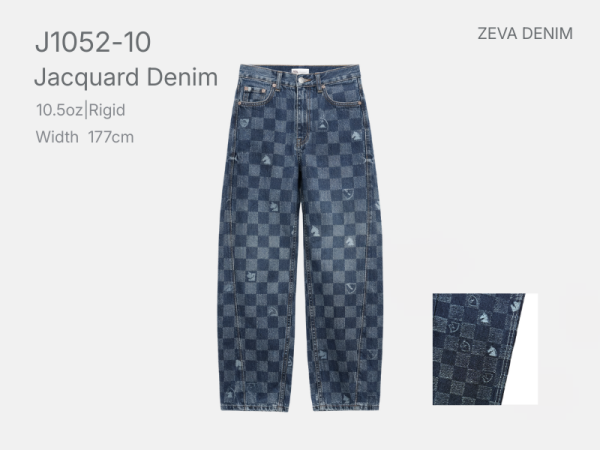
Recommended applications include:
denim jackets
overshirts
wide-leg jeans
straight pants
denim skirts
structured outerwear
These silhouettes allow pattern clarity.
Highly segmented garments may break grid alignment. Slim fits may distort geometry. Relaxed shapes are preferred.
Trend Alignment of Chessboard Jacquard Denim
Chessboard jacquard denim aligns with several market directions:
modern retro denim
graphic structured denim
statement womenswear denim
premium casual denim
heritage-inspired collections
These trends emphasize identity and structure. Checker patterns support this approach.
Structural Difference of Chessboard Jacquard in Denim
Structure
woven grid creates strong rhythm
Color
tonal contrast emphasizes geometry
Density
balanced repeat improves readability
These characteristics differentiate chessboard jacquard from floral or paisley denim.
PART 4 — Closing
Chessboard Jacquard Denim as Structured Identity Fabric
As denim evolves, fabric identity becomes more important. Chessboard jacquard denim represents a move toward structured storytelling. The pattern integrates symbolism, geometry, and texture.
This type of jacquard offers differentiation before washing and depth after finishing. It balances bold identity with wearable structure. That makes it suitable for modern collections seeking visual clarity.
J1052 illustrates this approach through checker geometry and knight motifs. The result is a jacquard denim fabric that is intelligent, structured, and visually distinctive.
For designers exploring patterned jacquard denim, chessboard motifs provide a compelling option. They offer order without rigidity, and identity without excess decoration.
This makes chessboard jacquard denim a relevant direction for future denim development.
 Spanish
  English
  Russian
  Arabic
  French
  Vietnamese