
Why Geometric Chenille Jacquard Denim Is Becoming the New Premium Texture for FW26/27
In recent seasons, denim trends have shifted away from loud graphics and excessive embellishment toward more sophisticated surface development. Instead of relying on prints or aggressive distressing, many brands are exploring texture-driven storytelling. J1071 “Modern Heritage” reflects this movement through a structured geometric chenille jacquard construction that combines classic menswear influences with modern denim aesthetics.
In this article, we will explore:
- Why geometric chenille jacquard denim is attracting growing attention in premium denim collections
- The historical origins and evolution of menswear geometric patterns
- Why texture fabrics are becoming increasingly important in product development
- How texture denim creates stronger visual value in both retail and social media environments
- The garment applications and commercial opportunities of geometric chenille denim
- Why structured texture may become one of the key directions for FW26/27 denim development
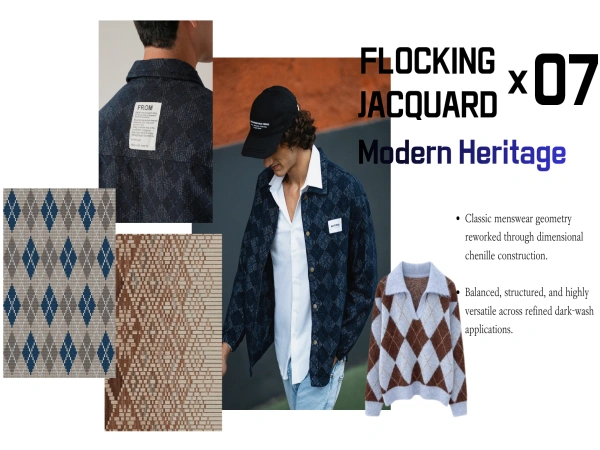
1. Design Element Analysis: Understanding the Appeal of Modern Heritage
Why Is This Design Worth Attention?
Unlike floral, animal, or decorative motifs that immediately communicate a specific mood, geometric patterns operate differently. Their strength lies in versatility.
J1071 Modern Heritage combines classic menswear geometry with dimensional chenille texture, creating a surface that feels sophisticated rather than decorative.
This distinction is important.
Many fashion patterns are trend-driven and seasonal. Geometric structures, however, tend to remain relevant across multiple seasons because they are rooted in proportion, rhythm, and visual balance rather than novelty.
As brands increasingly seek products with longer commercial lifespans, structured texture fabrics become particularly attractive.
The result is a denim fabric that feels elevated without appearing overly fashion-forward, making it easier for brands and retailers to sell across different customer groups.
The Origins of Geometric Menswear Patterns
Geometric patterns have long been associated with traditional menswear.
Their roots can be traced to:
- British tailoring traditions
- Scottish textile heritage
- European suiting fabrics
- Military uniforms
- Heritage workwear
Throughout the 19th and 20th centuries, geometric motifs such as checks, grids, herringbones, diamonds, and repetitive structures became symbols of craftsmanship and sophistication.
Unlike floral designs, which often emphasize emotion and decoration, geometric patterns communicate order, structure, discipline, and refinement.
During the 1980s and 1990s, geometric surfaces became particularly prominent in luxury menswear, business attire, and premium wool fabrics.
Today, designers are reinterpreting these traditional patterns through new materials and construction methods—including jacquard denim and chenille denim.
Why Are Geometric Textures Returning Now?
The recent resurgence is closely connected to broader fashion shifts.
Over the past decade, fashion moved heavily toward:
- Graphic logos
- Streetwear branding
- Loud prints
- Digital-inspired visuals
As consumers become increasingly exposed to visual content, many are now seeking products that feel more tactile and authentic.
Texture offers something that graphics cannot:
It creates interest through physical depth rather than visual noise.
This explains why many FW26/27 trend forecasts emphasize:
- Surface innovation
- Material storytelling
- Quiet luxury
- Refined texture
J1071 fits directly into this movement.
Its appeal comes not from color contrast but from dimensional construction.
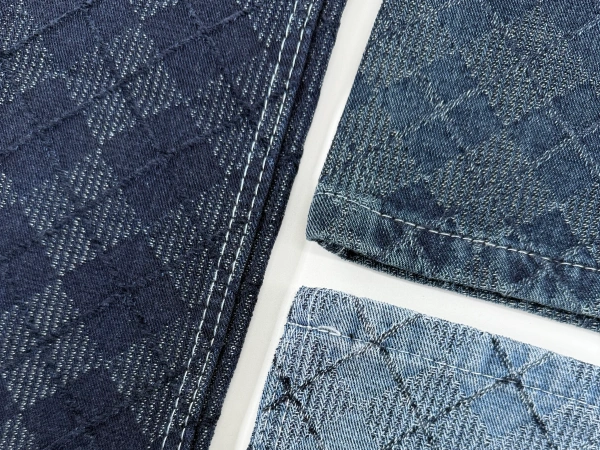
Cultural Meaning Behind Geometric Structures
Geometric patterns often symbolize:
- Stability
- Logic
- Craftsmanship
- Precision
- Heritage
These values align particularly well with denim.
Denim itself originated as a functional workwear fabric built around durability and structure.
When geometric motifs are integrated into denim through chenille jacquard construction, the result feels authentic rather than forced.
The pattern becomes part of the fabric architecture rather than an added decoration.
Visual Characteristics of J1071
Several visual features define this design:
Dimensional Surface
The chenille construction creates a raised texture that catches light differently throughout the garment.
Structured Rhythm
The geometric repeat introduces order and balance across the fabric surface.
Tonal Sophistication
Because texture replaces excessive color contrast, the overall appearance feels premium and mature.
Strong Wash Compatibility
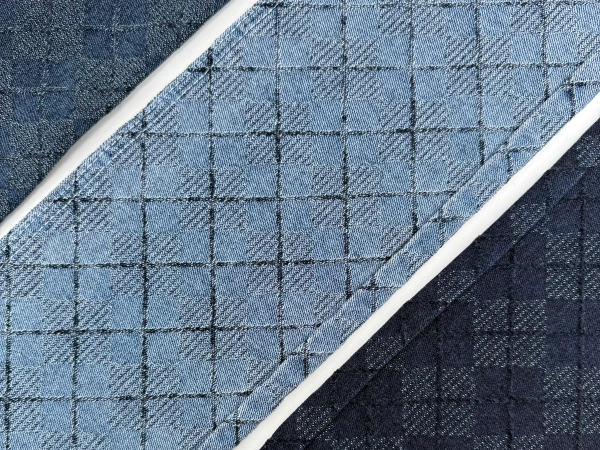
The pattern remains visible under both dark and faded wash treatments, giving designers greater flexibility during garment development.
2. Jacquard Denim Industry Analysis: Texture as a Product Development Strategy
Why Is Texture Fabric Better for Social Media Exposure?
Social media increasingly rewards products that communicate value instantly.
Consumers scrolling through hundreds of images often make judgments within seconds.
Texture performs exceptionally well because it creates visual depth even before details are explained.
Raised chenille surfaces generate shadows, highlights, and tactile contrast that attract attention naturally.
This makes texture fabrics highly photogenic across:
- إنستغرام
- TikTok
- Fashion e-commerce platforms
Why Does Texture Denim Create Stronger First-Impression Value?
Many consumers cannot immediately recognize fabric quality.
However, they can immediately recognize visual complexity.
Texture denim often appears more expensive because:
- It looks technically advanced
- It suggests craftsmanship
- It creates dimensional richness
This perception occurs before consumers even touch the garment.
In many retail environments, first-impression value strongly influences purchasing decisions.
Why Can Texture Denim Reduce Garment Design Pressure?
One common challenge for designers is creating unique garments without excessive construction complexity.
Texture fabrics solve this problem.
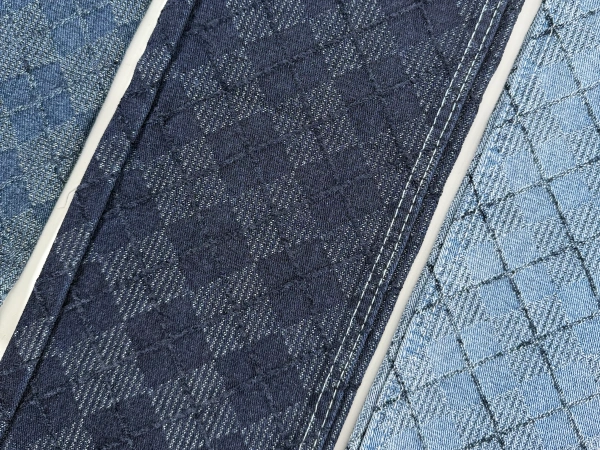
When the fabric itself already contains strong visual interest, garments can remain relatively simple.
For example:
- Straight-leg jeans
- Overshirts
- Trucker jackets
- Utility trousers
can achieve a premium appearance without complicated panels, trims, or embroidery.
This often reduces development costs while maintaining perceived value.
Why Will “Comfort Texture” Become a Future Denim Direction?
Historically, texture and comfort were often considered opposites.
Heavy textures frequently resulted in stiff fabrics.
Modern chenille constructions are changing this perception.
Consumers increasingly want products that feel:
- Comfortable
- Soft
- Relaxed
- Elevated
This demand has created the concept of “Comfort Texture.”
Rather than aggressive texture, brands are pursuing surfaces that offer visual richness while maintaining wearability.
J1071 aligns closely with this trend.
Its dimensional appearance feels substantial without becoming visually aggressive.
Why Is Texture More Important Than Color for Winter Development?
Winter collections traditionally rely on darker color palettes.
This creates a challenge:
If every garment uses similar colors, differentiation becomes difficult.
Texture solves this problem.
Instead of introducing new colors, brands can introduce new surfaces.
This approach provides:
- Greater versatility
- Longer product life
- Easier coordination within collections
- Higher perceived quality
As a result, texture often becomes a stronger design tool than color in cold-season development.
3. Design-Specific Analysis: Commercial Potential of Modern Heritage Geometry
What Garment Categories Suit This Fabric Best?
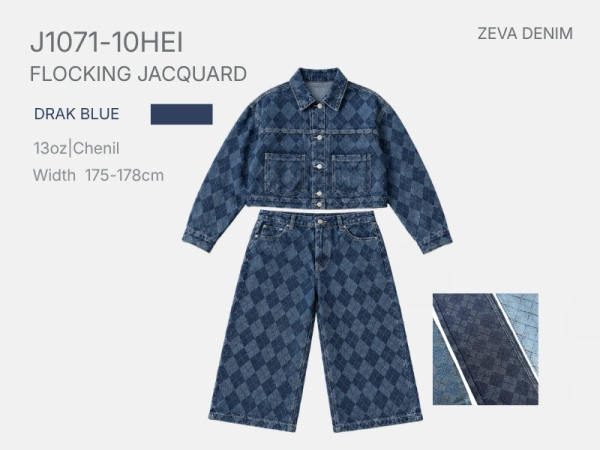
Based on its structure, weight, and visual language, J1071 is particularly suitable for:
Men’s Products
- Dark-wash jeans
- Overshirts
- Utility jackets
- Workwear-inspired outerwear
Women’s Products
- Relaxed jackets
- Wide-leg trousers
- Structured skirts
- Contemporary matching sets
Unisex Collections
The geometric nature of the pattern makes it highly gender-neutral, supporting modern unisex product strategies.
Which Fashion Trends Does It Match?
Quiet Luxury
The pattern communicates sophistication without relying on logos or branding.
Modern Heritage
Traditional menswear influences remain highly relevant across luxury and contemporary fashion.
Elevated Workwear
The structured aesthetic works naturally within premium workwear-inspired collections.
Refined Utility
The pattern complements clean silhouettes while adding visual depth.
What Makes This Geometry Different When Combined with Denim?
The combination creates three distinctive advantages.
Structural Contrast
The softness of chenille interacts with denim’s rugged twill construction.
Tonal Depth
Dark indigo washes enhance the dimensional quality of the pattern.
Controlled Density
Unlike all-over decorative florals, geometric motifs create visual interest while preserving balance and wearability.
This balance significantly broadens commercial applicability.
Why Is It More Commercial Than Many Fashion Prints?
Many fashion prints have strong seasonal limitations.
Geometric texture behaves differently.
It appeals to consumers seeking:
- Premium quality
- Subtle differentiation
- Long-term wearability
This often results in:
- Lower markdown risk
- Longer retail shelf life
- Wider customer acceptance
For brands, these factors can be more valuable than short-term trend appeal.
Conclusion: The Future of Denim May Be Built Through Texture Rather Than Graphics
J1071 Modern Heritage demonstrates a broader shift occurring throughout the denim industry.
As consumers move away from obvious branding and disposable trends, surface innovation is becoming increasingly important.
The success of texture-driven denim is not simply about decoration. It reflects a growing demand for products that communicate quality through construction rather than graphics.
By combining traditional geometric influences with contemporary chenille jacquard technology, J1071 creates a fabric that feels simultaneously familiar and modern, structured yet comfortable, decorative yet highly wearable.
For designers, brands, and denim developers preparing future collections, this type of geometric chenille denim represents more than a fabric trend—it represents a product strategy built around texture, longevity, and perceived value.
To see how the fabric performs across different wash effects, garment applications, and close-up texture views, explore the product page and accompanying development video, where the dimensional character of the chenille surface can be observed in greater detail.
 Arabic
  English
  Russian
  Spanish
  French
  Vietnamese